The Hands That Feed the World’s Sweet Tooth: The Bitter Economics of Chocolate
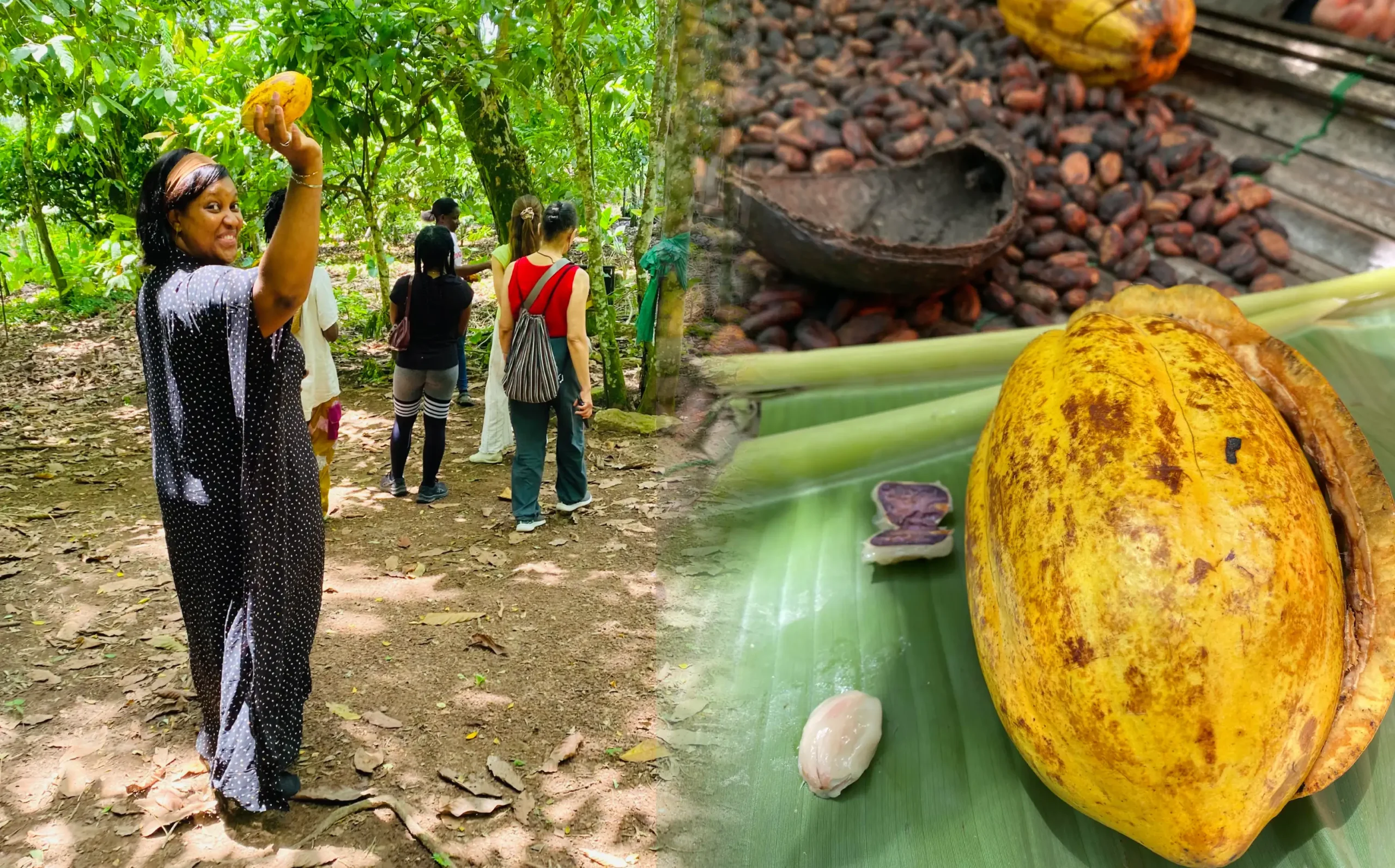
This isn’t my first visit to Tetteh Quarshie’s original cocoa farm in Akuapem Mampong where he first cracked open the soil and deposited his smuggled Fernandopo seeds in 1879. After all, Mampong is my hometown and his family house is right next to mine along the main road that bifurcates the vibrant town. Nana Barima Kofi Perbi, my father’s father, had several cocoa farms himself but unlike Tetteh Quarshie who was a blacksmith he was a goldsmith.
But what made this visit with my Nigerian Paediatrician friend and B2B ConneXion speaker hit different was that I was visiting the organic roots of the entire cocoa/chocolate global value chain barely three weeks after speaking in #Switzerland and being bewildered by all that the Swiss and co had done with the raw beans from my country. To think that all the farming—even the best varieties take 2-3 years to fruit; Tetteh Quarshie’s takes 7 years)—harvesting, drying, fermenting and bagging constitutes approximately 10% of the $400 billion market!
Ghana sits at the beginning of the cocoa value chain, but most of the value is created at the end of it. And that asymmetry is not accidental. It’s the result of history, incentives, and power. Cocoa didn’t just “happen” to be exported raw. During colonial rule, places like Ghana were deliberately structured as producers of raw materials, while Europe became the site of processing, branding, and finance. You can’t do much about history; but how about changing tomorrow’s narrative by today’s markedly different thinking and actions?
Value is not in the bean—it’s in what happens after. The tragedy—and opportunity—is precisely that the value balloons as you move farther away from the farm. Ghana and my second country Côte d’Ivoire—global no. 2 and no. 1 producers of cocoa, accounting for 60% of world production—are indispensable but not where the money is made. Companies like Nestlé or Barry Callebaut capture far more value per kilogram than the farmer ever will. The farmer often receives something like 6–8% of the final chocolate bar’s retail value; the indispensable farmer has no dispensable income. The person sweating under the cocoa tree is economically furthest from the premium shelf in Zurich airport.
Switzerland doesn’t grow cocoa. Yet it dominates premium chocolate. I was determined not to buy a single slab of chocolate while in Zürich. Yet I returned to Ghana with a ‘truckload’ of Swiss chocolate. Gifts. Gifts. Gifts. How could I explain to my hosts for them to understand that taking Swiss chocolate to Ghana is like carrying coal to Newcastle or selling sand in the Sahara. Or is it? The bitter cocoa truth rather is that returning chocolate to Accra from Switzerland means the cocoa bean has travelled full circle. The way it was originally designed to be. Albeit a vicious cycle.
The value is not in the bean. It is in the beings who will choose to break the vicious cycle and create new value. That takes leadership. Leadership at its best. The (cocoa) bean alone is not enough; the (human) being alone is not enough either.
Why? Because producing the majority of a raw commodity is not the same as controlling the industry built on top of it. Switzerland imports cocoa beans it cannot grow, transforms them, then exports cultural prestige wrapped in gold foil (gold is Ghana’s other top export). Meanwhile Ghana exports beans and gold and imports finished aspiration. That’s not merely economics. That’s value creation, that’s narrative power. And value creation and narrative power are often where the highest margins hide.